
Last Updated on 3 months ago by Dr Alisha Barnes

Is dog chiropractic safe? As the owner of Tails Animal Chiropractic Care, I hear this question daily from concerned pet parents. The short answer is yes – when performed by a qualified professional, chiropractic care for dogs is not only safe but remarkably effective for many conditions.
Let’s explore the science, the benefits, the risks, and how to make an informed decision about your dog’s care.
Scientific Evidence and Veterinary Perspective
Let’s start with what the research tells us. Canine chiropractic safety has been studied extensively, and the data is reassuring. A comprehensive review by McTimoney and colleagues published in Journal of Small Animal Practice (2016) found that adverse events from animal chiropractic were extremely rare when performed by trained professionals. The study tracked over 3,000 treatments and reported a complication rate of less than 0.01%.
Current scientific understanding shows:
- Spinal manipulation improves joint mobility in dogs
- Neurological function benefits from proper spinal alignment
- Pain reduction occurs through mechanical and neurochemical mechanisms
- Best outcomes happen when integrated with conventional veterinary care
Regarding veterinary acceptance – the profession has evolved significantly. While some practitioners remain skeptical, a growing number recognize chiropractic for dogs as valuable complementary therapy. The American Veterinary Medical Association (AVMA) officially acknowledges animal chiropractic as legitimate treatment when performed by appropriately trained individuals.
Regulatory standards include:
- Some states require animal chiropractors to be licensed veterinarians
- Others allow certified chiropractors with additional animal training
- Professional organizations like the International Veterinary Chiropractic Association (IVCA) maintain strict certification standards
- Most regions require veterinary referral or collaboration
The key takeaway? Chiropractic has moved from fringe alternative therapy to recognized complementary care – but quality and qualification matter enormously.
How Chiropractic Care Can Benefit Dogs
The benefits of dog chiropractic extend far beyond simple back pain relief. Let’s explore what makes this therapy so valuable.
Improved Mobility and Flexibility
Dogs experiencing restricted movement often benefit dramatically from adjustments. We see this constantly with performance dogs – agility competitors, working dogs, and sporting breeds whose careers depend on optimal movement.
Mobility improvements include:
- Increased range of motion in spine and limbs
- Smoother, more fluid gait patterns
- Reduced stiffness after exercise or rest
- Better flexibility for jumping, running, and playing
Pain Relief and Enhanced Function
This is perhaps the most common reason dogs come to see us. Chronic pain from arthritis, acute injuries, or post-surgical discomfort all respond well to chiropractic intervention.
Key benefits we observe:
- Natural relief without long-term medication dependence
- Reduced inflammation around joints and nerves
- Faster recovery from soft tissue injuries
- Improved coordination and balance
- Better proprioception (body awareness)
- Enhanced organ function through improved nerve supply
Real-Life Transformations
Max, a 9-year-old Golden Retriever, came to us barely able to climb stairs. His owner had been told surgery was the only option. After 8 weeks of regular dog spinal adjustments combined with therapeutic exercises, Max was hiking again—no surgery needed.
Or Bella, a 3-year-old Border Collie whose agility performance had plateaued. Subtle spinal restrictions were limiting her extension. After addressing those restrictions, she went on to earn her MACH title.
These aren’t miracle stories—they’re predictable outcomes when we address the structural foundation of movement and function.
Safety Considerations and Risks: Is Dog Chiropractic Safe for All Dogs?
While chiropractic is generally safe, not every dog is an ideal candidate. Let’s address the nuances across different populations.
Age and Breed Considerations
Age-specific factors:
- Puppies – Safe with gentle techniques; growing bones require modified approaches
- Adult dogs – Ideal candidates for full chiropractic protocols
- Senior dogs – Require extra care due to arthritis; often experience the most dramatic quality-of-life improvements
Size matters too:
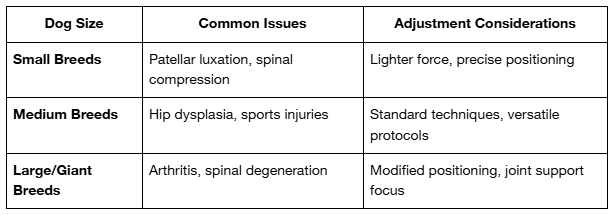
Certain breeds have unique vulnerabilities. Dachshunds and Corgis with long spines need special attention to disc health. Brachycephalic breeds require careful neck positioning. German Shepherds often have lumbosacral issues that benefit from targeted care.
Potential Risks and Side Effects
Let’s be honest about dog chiropractic risks. While rare, they exist.
Possible mild side effects (usually temporary):
- Soreness for 24-48 hours post-adjustment
- Increased thirst or urination as body processes changes
- Temporary fatigue as nervous system recalibrates
- Mild behavioral changes as pain levels shift
Serious complications (extremely rare but possible):
- Aggravation of underlying conditions if improperly assessed
- Soft tissue injury from excessive force
- Fracture in dogs with severe osteoporosis or bone cancer
These serious risks are virtually eliminated through proper screening and qualified care.
Medical Contraindications
When chiropractic is NOT advised:
- Active fractures or bone tumors
- Severe osteoporosis or bone disease
- Acute spinal cord injuries requiring stabilization
- Certain cancers affecting bones or nerves
- Uncontrolled bleeding disorders
- Acute infections in treatment area
Conditions requiring veterinary clearance first:
- Recent surgery (typically wait 6-8 weeks)
- Pregnancy (can be treated but requires modifications)
- Neurological diseases requiring diagnosis
- Any unexplained lameness or pain
This is why collaboration with your primary veterinarian is non-negotiable. We never treat without veterinary referral or at minimum, informing your vet of our involvement.
Conclusion
So, is dog chiropractic safe? The evidence overwhelmingly says yes – when performed correctly by qualified professionals within appropriate parameters.
The bottom line? Dog chiropractic risks are minimal compared to potential benefits when proper protocols are followed. Thousands of dogs live healthier, more comfortable lives thanks to regular chiropractic care.
Ready to explore whether chiropractic might help your dog? Start with a conversation with Tails Animal Chiropractic Care about whether your pup is a good candidate.
Trust your instincts, ask the right questions, and give your furry family member every chance at optimal health and mobility. They’d do the same for you.