
Last Updated on 8 months ago by Dr Alisha Barnes
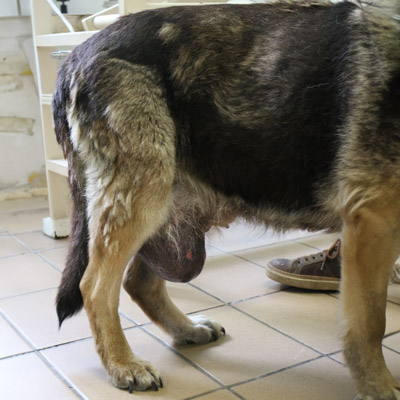
Trouble rising in dogs is one of the earliest and most telling signs that something’s going wrong with their mobility. As an animal chiropractor, we see this every single day and we know how scary it feels to watch your best friend struggle with something that used to be effortless.
Let’s talk about what’s really happening and what you can do about it.
What Does “Trouble Rising in Dogs” Really Mean?
First, let’s be clear about what we’re discussing. Trouble rising means your dog consistently struggles to stand up from a lying or sitting position. This is different from temporary stiffness after a long hike or a brief hesitation on a slippery floor.
Key differences:
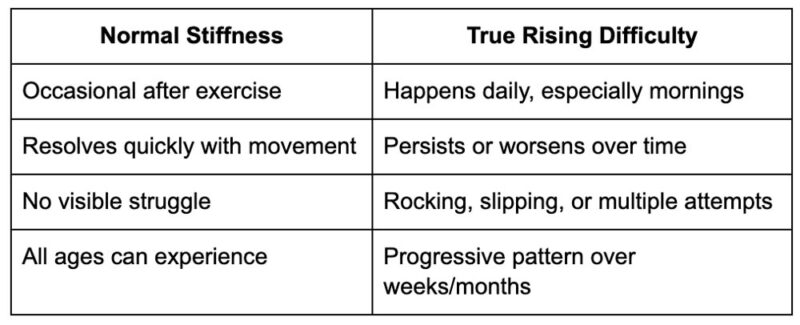
Here’s why standing up is one of the first functions to fail: it requires coordinated strength, balance, nerve communication, and joint stability all working together perfectly. When any part of this system breaks down, rising becomes difficult.
Many serious spinal problems start with subtle rising difficulty months before owners notice anything else wrong. That’s why we always tell clients – if you’re seeing this pattern, don’t wait. Your dog is telling you something important.
See more: Gait Abnormalities in Dogs: From Diagnosis to Recovery
5 Most Common Reasons Your Dog Has Trouble Rising
1. Arthritis and Joint Degeneration
Arthritis isn’t just an “old dog problem” – it’s the number one cause of mobility decline in dogs of all ages. We see it in hips, knees, elbows, and throughout the spine.
Why arthritis makes rising so hard:
- Joints stiffen during rest periods
- Inflammation increases overnight when dogs aren’t moving
- Morning is when pain and stiffness peak
- Weight-bearing joints (hips and knees) hurt most when standing
But here’s something crucial: spinal misalignment accelerates joint wear throughout the body. When your dog’s spine isn’t moving properly, it creates compensatory stress on their hips, knees, and shoulders. This speeds up arthritis in those joints significantly.
2. Intervertebral Disc Disease (IVDD) and Spinal Compression
IVDD happens when the cushioning discs between vertebrae bulge, herniate, or rupture. This compresses the spinal cord and nerve roots, disrupting signals to the legs.
How disc problems cause rising difficulty:
- Nerve signals to hind limbs get weakened or blocked
- Dogs lose strength and coordination in their back legs
- Pain from disc pressure makes movement hesitant
- Core stability decreases, making standing inefficient
Early warning signs before severe collapse:
- Reluctance to jump or climb stairs
- Arched or hunched back posture
- Yelping when touched along the spine
- Hind leg weakness or wobbling
Breeds like Dachshunds, Corgis, Beagles, and French Bulldogs face higher IVDD risk due to their body structure. But we’ve seen disc issues in dogs of every size and breed.
The key is catching it early. Dogs showing trouble rising from disc problems often improve dramatically with conservative care – no surgery needed.
3. Degenerative Myelopathy (Progressive Nerve Damage)
Degenerative Myelopathy (DM) is a progressive neurological disease that gradually destroys nerve function in the spinal cord. Think of it like ALS in humans.
Typical pattern and timeline:
- Usually starts in dogs 8+ years old
- German Shepherds, Corgis, and Boxers most commonly affected
- Begins with hind-end weakness and dragging toes
- Progresses over 6-36 months to complete hind limb paralysis
The progression timeline:
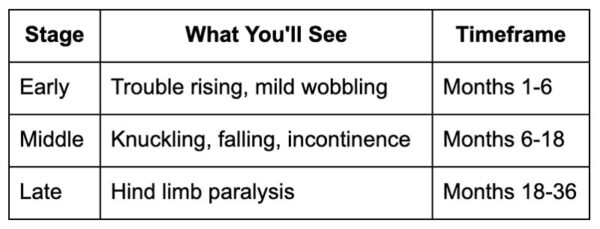
While DM can’t be cured, early mobility care – including chiropractic adjustments, physical therapy, and targeted exercise – can genuinely slow progression and maintain quality of life longer. Research by Dr. Joan Coates at University of Missouri confirms this approach extends functional mobility.
4. Muscle Weakness and Poor Core Stability
As dogs age, they lose muscle mass naturally – a process called sarcopenia. But muscle loss happens faster when dogs are less active due to pain or when spinal problems interfere with nerve signals.
Why weak muscles make rising nearly impossible:
- Core muscles support the spine during standing
- Hind limb muscles provide the push-off force
- Without strength, dogs can’t generate enough power
- Weak stabilizers make every movement inefficient and exhausting
Critical muscle groups for standing:
- Core stabilizers (abdominals and back muscles)
- Hip extensors (gluteals and hamstrings)
- Quadriceps (front thigh muscles)
- Shoulder stabilizers (for front-end support)
The frustrating part? Muscle weakness and pain create a vicious cycle. Pain reduces activity, activity loss causes muscle wasting, and muscle loss makes movement more painful.
Breaking this cycle requires addressing both the underlying spinal or joint problem AND rebuilding strength through appropriate exercise.
5. Hidden Spinal Misalignments and Nerve Interference
This is where animal chiropractic shines and it’s often the missing piece that conventional veterinary care overlooks.
Small spinal restrictions and misalignments disrupt nerve signaling throughout your dog’s body. These restrictions might not show up on X-rays, but they absolutely affect function.
How spinal misalignments cause trouble rising:
- Nerves controlling leg muscles get interference
- Brain-to-muscle communication weakens
- Proprioception (body awareness) decreases
- Dogs lose coordination and confidence in movement
Here’s what amazes us most: dogs compensate silently for months or even years before owners notice symptoms. By the time you see trouble rising, those spinal restrictions have usually been there for a while.
The incredible part? Many dogs improve significantly without drugs or surgery once we restore proper spinal alignment and nerve flow. We’ve seen dogs who struggled for months rise smoothly within weeks of starting chiropractic care.
How Chiropractic Care Helps Dogs Struggling to Stand
Let’s get specific about how animal chiropractic addresses trouble rising in dogs.
-
Improving nerve-muscle communication
- Gentle adjustments remove spinal restrictions
- Nerve signals flow freely to legs again
- Muscle activation patterns normalize
- Coordination and strength return
-
Restoring spinal biomechanics
- Each vertebra moves through its proper range
- Disc pressure decreases
- Joint wear slows down
- Overall movement becomes more efficient
-
Reducing compensatory strain patterns
- We identify which joints are overworking
- Adjustments redistribute load evenly
- Secondary pain points resolve
- Your dog moves more symmetrically
-
Building confidence in movement
- Less pain means more willingness to move
- Improved strength makes standing easier
- Dogs rise more smoothly and quickly
- Quality of life improves dramatically
At Tails Animal Chiropractic Care, we’ve helped hundreds of dogs in Fort Collins and Broomfield regain their ability to stand comfortably. The transformations never get old.
Help Your Dog Stand Strong Again
Watching your dog struggle to stand breaks your heart. But trouble rising in dogs doesn’t have to be the beginning of the end. With proper diagnosis and care, many dogs regain comfortable, confident mobility.
Whether your dog is dealing with arthritis, disc issues, muscle weakness, or spinal misalignments, animal chiropractic care offers a gentle, effective path forward without relying solely on medications or surgery.
Ready to help your best friend move better? At Tails Animal Chiropractic Care, we provide comprehensive mobility evaluations for dogs struggling to stand. We’ll identify the root cause and create a personalized care plan that actually works.