
Something most pet parents don’t know: many mysterious symptoms trace back to one powerful nerve. Understanding vagus nerve in dogs symptoms can unlock answers you’ve been searching for.
Let’s dive into what this nerve does and how to recognize when it’s not working properly.
What Is the Vagus Nerve in Dogs?
The vagus nerve is your dog’s internal calm-down switch. It’s the longest nerve in their body, running from the brainstem through the neck, chest, and abdomen.
Think of it as the master regulator that tells your dog’s body: “Okay, it’s safe now. Time to rest, digest, and heal.”
What the vagus nerve controls:
- Heart rate and cardiovascular function
- Breathing patterns
- Digestive system activity
- Immune response
- Inflammation levels
This nerve is part of the parasympathetic nervous system – the “rest, digest, and heal” mode. When it’s working well, your dog bounces back from stress quickly. When it’s not? That’s when problems show up.
Vagus Nerve Symptoms in Dogs (Complete List)
Let’s break down the signs of vagus nerve problems in dogs by category. You might notice just one or two symptoms or several clustering together.
Digestive & Gut Symptoms (Most Common)
The gut-vagus connection is huge. In fact, digestive issues are often the first red flag we see.
Watch for:
- Chronic diarrhea or constipation that comes and goes
- Frequent vomiting or signs of nausea
- Picky eating or sudden appetite loss
- Bloating, excessive gas, or sluggish digestion
If your dog’s stomach issues don’t improve with diet changes alone, vagus nerve dysfunction might be the missing piece.
Behavioral & Emotional Symptoms
Dogs can’t tell us they’re anxious, but their behavior speaks volumes. Vagal dysfunction often shows up as emotional dysregulation.
Common signs include:
- Generalized anxiety or fearfulness without clear triggers
- Reactivity or aggression when stressed
- Inability to relax or “turn off” after excitement
- Shutdown behavior – when your dog seems checked out or withdrawn
These aren’t just personality quirks. They’re often signs that your dog’s nervous system can’t regulate properly.
Stress Regulation & Recovery Issues
Notice how long it takes your dog to calm down? That’s a vagal tone in action or lack of it.
Red flags:
- Takes hours to settle after a walk or playtime
- Gets overstimulated by normal daily activities
- Emotional crashes following training sessions or social interactions
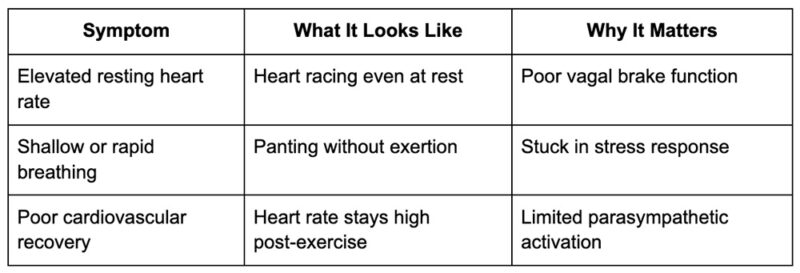
Heart Rate & Breathing Symptoms
The vagus nerve directly controls your dog’s cardiovascular and respiratory systems.
Neurological & Physical Symptoms
Sometimes vagus nerve symptoms in dogs manifest physically.
Look out for:
- Unexplained lethargy or weakness
- Sensitivity around the neck or head area
- Trembling or shaking during stressful situations
- Clumsiness or poor coordination
These symptoms often overlap with other conditions, which is why professional evaluation matters.
Immune & Inflammatory Symptoms
Your dog’s vagus nerve talks directly to their immune system. When that communication breaks down, inflammation runs wild.
Warning signs:
- Getting sick frequently
- Wounds or injuries healing slowly
- Chronic skin conditions, ear infections, or seasonal allergies
The vagus nerve’s anti-inflammatory pathway is well-documented. When it’s not firing properly, inflammation becomes chronic.
Sleep & Recovery Issues
Good sleep requires strong vagal function. Dogs with dysfunction struggle to reach deep, restorative rest.
You might notice:
- Restless sleep with frequent position changes
- Difficulty entering deep sleep cycles
- Night pacing or waking up repeatedly
Quality sleep is when healing happens. Without it, everything else suffers.
Post-Surgery or Post-Injury Symptoms
Here’s something we see often: dogs who were fine before surgery but struggle afterward.
Post-procedure red flags:
- Digestive system shuts down after anesthesia
- Heightened anxiety that wasn’t there before
- Surgical sites healing slower than expected
Anesthesia and surgical stress can impact vagal function. Recognizing this helps speed recovery.
Gut-Brain Axis & Emotional Digestion Link
This is where everything connects. Your dog’s gut and brain communicate constantly through the vagus nerve.
The emotional-digestive connection:
- Diarrhea triggered by stressful events (vet visits, thunderstorms)
- Complete appetite loss during anxiety
- Digestive flare-ups after emotional experiences
Ever notice your dog’s stomach issues worsen during stressful times? That’s vagus nerve dysfunction in dogs showing up through the gut-brain axis.
How Dog Chiropractic Care Supports Vagus Nerve Function
Now for the good news: we can support vagal function through nervous system care.
At Tails Animal Chiropractic Care, we focus on the upper cervical spine where the vagus nerve exits the brainstem and travels through the neck.
How chiropractic helps:
- Restores proper nerve communication: Gentle adjustments remove interference where the nerve passes through the neck
- Reduces mechanical pressure: Misalignments in the cervical spine can compress or irritate the vagus nerve
- Supports parasympathetic activation: Improved nerve function helps dogs access “rest and digest” mode
- Works alongside veterinary care: We’re part of your dog’s healthcare team, not a replacement
We’ve watched anxious dogs become calmer, digestive issues resolve, and reactive behavior soften – all because we addressed the nervous system foundation.
Final Thoughts
Recognizing vagus nerve in dogs symptoms is the first step toward helping your pup feel better. This isn’t about chasing individual symptoms – it’s about understanding the nervous system foundation beneath them.
Whether your dog struggles with anxiety, digestion, or recovery issues, poor vagal tone might be the common thread tying everything together.
If you’re seeing multiple signs of vagus nerve problems in dogs, trust your instincts. At Tails Animal Chiropractic Care, we specialize in nervous system-based care for dogs in Fort Collins and Broomfield, CO. We work alongside your veterinarian to address the root cause, not just mask symptoms.
Ready to explore if vagal dysfunction is affecting your dog? Contact us at Tails Animal Chiropractic Care to schedule a consultation. Let’s work together to restore balance, support healing, and help your pup feel like themselves again.