
Last Updated on 7 months ago by Dr Alisha Barnes

Something feels a little “off” about the way your dog is moving lately. Maybe they hesitate before jumping onto the couch, or their mornings seem a bit slower than usual. You’re not overreacting – your instincts are telling you something worth paying attention to.
The good news? You don’t need a vet visit to start gathering answers. Knowing how to check your dog’s mobility at home is one of the simplest and most powerful things you can do as a pet owner. It takes just a few minutes and zero special equipment.
At Tails Animal Chiropractic Care, we help dogs in Fort Collins and Broomfield, CO move better and feel better every day. Let’s walk through exactly how to spot early signs – before they become bigger problems.
Why Checking Your Dog’s Mobility Early Matters
Dogs are natural-born storytellers – but not with words. They tell their stories through movement. And here’s the tricky part: dogs instinctively hide pain. It’s built into them. In the wild, showing weakness could mean danger. So even when something hurts, your dog will often push through it silently.
That’s why early detection matters so much. Catching signs of mobility issues in dogs before they progress opens the door to gentler, less invasive options like rehabilitation, chiropractic care, and simple lifestyle adjustments – rather than more aggressive interventions down the road.
Research by Dr. Llewellyn and colleagues, published in the Journal of Small Animal Practice, confirmed that early identification of gait abnormalities in dogs leads to significantly better long-term outcomes and quality of life.
How to Check Your Dog’s Mobility at Home
You don’t need fancy tools or training for this. All you need is a calm space, a few minutes, and a watchful eye. Here are five simple checks we recommend:
1. Watch How Your Dog Walks
This is your starting point. Pick a flat, well-lit area and watch your dog walk naturally – don’t direct them or rush them.
Look for these red flags:
- Shortened stride on one side
- Head bobbing up and down with each step
- Toes dragging or scuffing the ground
- Uneven or swaying hip movement
A smooth, even stride on all four legs is what healthy movement looks like. Any deviation is worth noting.
2. The Sit-to-Stand Test
Ask your dog to sit, then encourage them to stand up normally.
Watch carefully for:
- Using front legs to “pull” their body up
- Hesitation or pausing before standing
- Any collapse or stumbling
- Whimpering or visible discomfort
This simple test reveals a lot about dog joint stiffness and rear-end strength. If standing feels hard, something may need attention.
3. Stair & Jump Hesitation Check
Stairs and jumping are where dog mobility problems tend to show themselves most clearly.
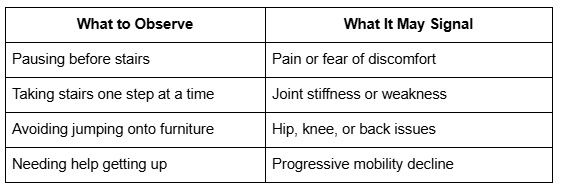
If your dog used to bound up stairs and now hesitates – that shift matters.
4. Gentle Range of Motion Awareness
While your dog is relaxed (after a nap works perfectly), gently notice how they hold their body. We are not suggesting you force any movement here.
Simply observe:
- Any resistance or tension when their neck or limbs are in certain positions
- Facial expressions like lip curling or ear flattening
- Pulling away from touch in specific areas
Important: Never force or push your dog’s limbs. If they pull away or show discomfort, stop immediately and note which area seems sensitive.
5. Nail & Paw Wear Check
This one catches a lot of owners off guard. Grab your dog’s paws and take a quick look at their nails.
What to check:
- Uneven nail wear between front and back paws
- Scuffing or worn-down nails on specific toes
- Cracked or overgrown nails from altered walking patterns
Uneven wear can quietly signal a limping dog situation or altered gait that hasn’t been obvious yet. It’s one of the easiest clues to miss.
What’s Normal Aging vs. a Mobility Problem?
Not every slowdown means something is wrong. Dogs naturally slow down as they age and that’s okay. But there’s an important line between normal aging and an actual dog mobility problem.
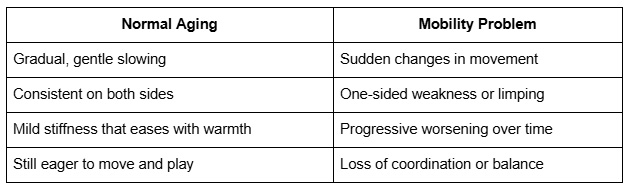
The key word here is “sudden.” A gradual, even slowdown over months or years is often just aging. A sudden shift – especially one that gets worse – deserves professional attention.
When to Seek Professional Help
If any of the checks above raised a flag, here’s a simple guide to help you decide your next step:
Seek help if you notice:
- Symptoms lasting more than a few days
- A sudden drop in mobility
- Clear signs of pain (whimpering, guarding, refusing to move)
- Difficulty standing, walking, or climbing stairs
- Any signs of neurological issues like dragging toes or loss of coordination
This is exactly where veterinary evaluation and dog chiropractic care become incredibly valuable. A professional assessment can identify joint restrictions, spinal misalignments, and nerve interference that are quietly affecting your dog’s movement and comfort.
At Tails Animal Chiropractic Care, we work alongside your veterinarian to create a safe, gentle plan tailored specifically to your dog’s needs.
Trust Your Instincts – And Act on Them
You know your dog better than anyone. If something feels “off” – even if you can’t quite put your finger on it – that feeling matters. Learning how to check your dog’s mobility at home gives you the tools to turn that gut feeling into real, useful information.
Early awareness leads to better outcomes. Every single time.
At Tails Animal Chiropractic Care, we’re here to help dogs in Fort Collins and Broomfield, CO feel and move their best. If your at-home checks have raised any concerns, we’d love to help.
Visit Tails Animal Chiropractic Care in Fort Collins or Broomfield, CO. Call or book a mobility assessment today.
Your dog gives you their whole heart every day. Let’s make sure their body keeps up.
See more: 5 Tips to keep your pet safe and healthy when increasing activity with warmer spring weather
FAQ
How often should I check my dog’s mobility?
Once a week is a great starting point – especially for middle-aged and senior dogs. It only takes a few minutes and helps you catch changes early.
Can mobility issues be reversed?
Many can, especially when caught early. Chiropractic care, physical rehabilitation, and lifestyle adjustments have helped countless dogs regain comfort and function.
Is chiropractic care safe for dogs?
Yes. When performed by a certified animal chiropractor, it is a gentle, non-invasive treatment. We tailor every session to your dog’s size, age, and condition.