Last Updated on 6 months ago by Dr Alisha Barnes
Pain management for dogs with hip dysplasia doesn’t have to mean a lifetime of NSAIDs or a rushed decision about surgery. There is a middle path – one built on integrative, evidence-informed care that addresses the whole dog, not just the joint. Here are five methods we rely on most.
1. Animal Chiropractic: Balancing the Biomechanics
Hip dysplasia is a structural problem. The joint doesn’t fit the way it should and over time, your dog’s body compensates. They shift weight forward, overload their front limbs, and develop secondary pain in the lower back, mid-spine, and neck that often goes completely unnoticed.
This is where animal chiropractic care makes a profound difference. By adjusting the pelvis and spine, we reduce that compensatory tension and restore more balanced movement patterns throughout the entire body.
Think of it this way: the hip is the problem, but the whole skeleton is paying the price. Chiropractic addresses both.
A 2019 review in the Journal of Veterinary Science (Haussler et al.) confirmed that spinal manipulation in dogs reduces musculoskeletal pain and improves range of motion — supporting what we see clinically every week.
2. Weight Management and Anti-Inflammatory Nutrition
This one is unglamorous but undeniably powerful. Every extra pound your dog carries adds roughly 4–5x that weight in force across the hip joint with each step. For a dog already dealing with a poorly fitting joint, that math matters enormously.
The dietary approach we recommend most:
- High-protein, low-carbohydrate diet – supports lean muscle mass while reducing inflammatory fat tissue
- Omega-3 fatty acids (EPA/DHA)
- Avoid fillers and highly processed kibble – these drive low-grade systemic inflammation that worsens joint pain over time
Even a 10–15% reduction in body weight can produce a visible improvement in gait. It’s one of the most effective and most underused – tools we have.
3. Regenerative Modality Therapy: Laser and PEMF
When people hear “laser therapy,” they sometimes picture something out of a sci-fi film. The reality is far gentler and genuinely impressive.
Class IV Cold Laser Therapy delivers targeted photonic energy into the hip joint capsule, stimulating cellular repair, increasing local circulation, and reducing inflammation – all without medication and without side effects. Most dogs visibly relax during treatment. Sessions typically run 10–15 minutes.
PEMF (Pulsed Electromagnetic Field) therapy generates low-frequency electromagnetic pulses that penetrate deep into tissue, reducing pain signals and supporting healing at the cellular level. Home PEMF mats are now widely available and offer a meaningful option for dogs with chronic, ongoing discomfort.
4. Targeted Nutraceuticals: Quality Over Quantity
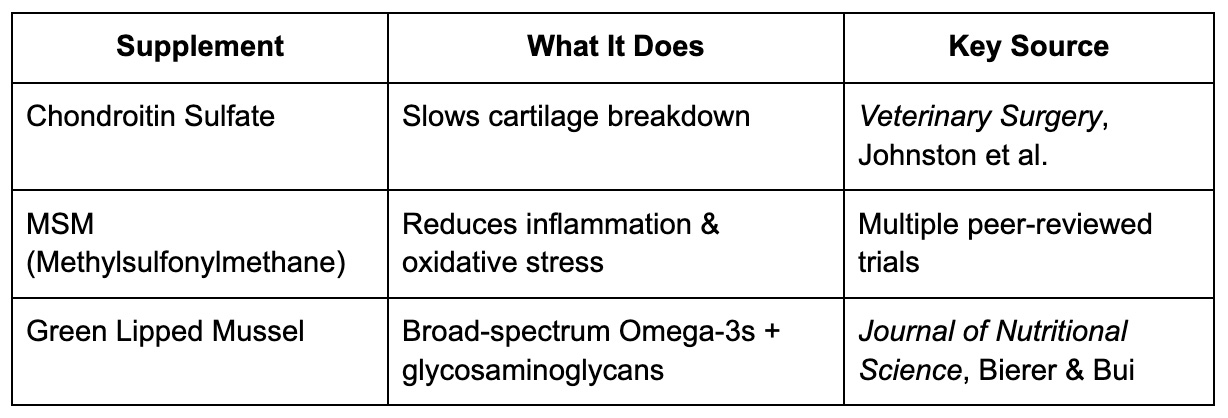
Walk into any pet store and you’ll find shelves full of joint supplements. Here’s the honest truth: most of them aren’t doing much.
Basic glucosamine alone is not enough. What the research actually supports:
5. Physical Rehabilitation and Hydrotherapy
Muscle is the unsung hero of hip dysplasia management. A loose, malformed hip joint has very little bony stability – which means the surrounding muscle is the only thing holding it together. Build that muscle, and you build a natural brace around the joint.
The challenge is that traditional exercise can be too high-impact for a dog already in pain.
- Underwater treadmill (hydrotherapy) – water buoyancy reduces joint load by up to 60% while allowing full muscle engagement. It’s low-impact, high-reward, and most dogs genuinely enjoy it
- Controlled land exercise – slow leash walks on even ground, gradually building duration
- Therapeutic strengthening – targeted exercises like the “gluteal bridge” (supported standing and weight shifts) that directly build the hip stabilizer muscles
Next Steps: Book a Mobility Assessment in Fort Collins
If your dog is showing signs of hip dysplasia or has already been diagnosed – the best thing you can do right now is get a full picture of what’s going on biomechanically.
At Tails Animal Chiropractic Care, your trusted dog chiropractor in Fort Collins and Broomfield, CO, we offer comprehensive mobility assessments that look beyond the hip joint to evaluate the whole body. From there, we build a customized, multi-modal pain management plan for your dog’s hip dysplasia – one designed around their specific needs, not a one-size-fits-all protocol.
Call us today to schedule your dog’s mobility assessment. Let’s get them moving comfortably again – because they deserve nothing less.
See more: Limping, Lameness, and Hip Dysplasia: How Chiropractic Care Supports Your Pet’s Health