
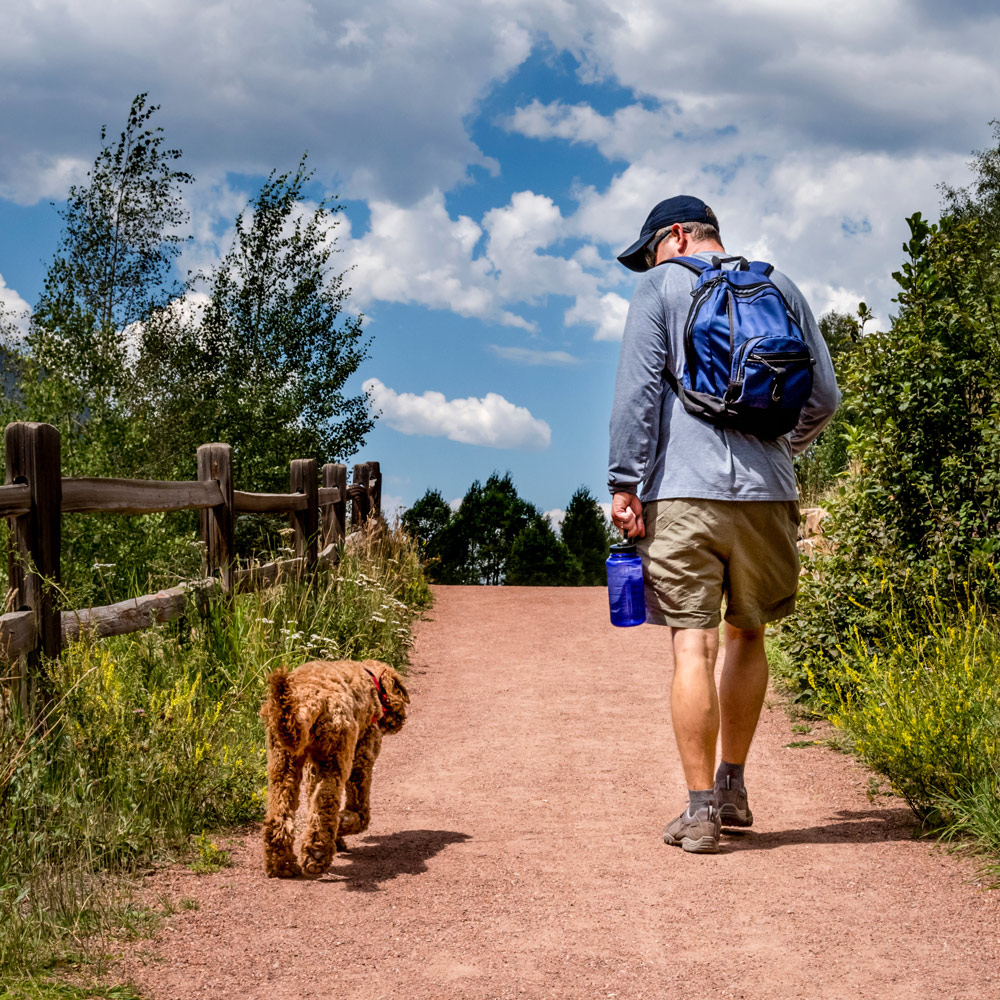
There’s nothing quite like watching your dog bound down a trail, ears flapping and tail wagging, as you explore the beautiful outdoors together. Here in Northern Colorado, we’re fortunate to have incredible places to hike with our pets, from Horsetooth Reservoir and Devil’s Backbone to the Poudre Canyon and Estes Park.
At Tails Animal Chiropractic, we love helping pets stay active and comfortable so they can continue enjoying the adventures they love. As hiking season ramps up, we also see an increase in sore, stiff, and injured pets – many of which could have been prevented with a little preparation.
Before you lace up your hiking boots and grab the leash, here are a few ways to help keep your pet safe, healthy, and trail-ready this summer.
Is Your Dog Ready for Hiking Season?
Before tackling longer or more challenging trails, ask yourself:
- Can your dog comfortably complete a 30 – 45 minute walk?
- Do they rise easily after resting?
- Can they navigate stairs without hesitation?
- Are they comfortable jumping into the car?
- Do they recover well after activity?
If you’re noticing stiffness, slowing down, or hesitation with activities that used to be easy, it may be worth addressing those issues before increasing their workload.
Prepare Their Body Before the Adventure
One of the most common mistakes pet owners make is expecting their dog to go from neighborhood walks to a challenging mountain hike overnight.
Just like people, pets need time to build strength and endurance. If activity levels have been lower during the winter or spring, gradually increase conditioning by:
- Increasing walk distances slowly
- Adding gentle hills to your routine
- Encouraging regular play and movement
- Building endurance over several weeks
A conditioned body is better equipped to handle uneven terrain, elevation changes, and longer periods of activity.
How Chiropractic Care Can Help Active Dogs Stay Trail-Ready
Movement matters.
When joints aren’t moving properly, pets often compensate by putting extra stress on other muscles and joints. Over time, those compensations can contribute to fatigue, soreness, and an increased risk of injury.
- At Tails Animal Chiropractic, we commonly see dogs who:
- Slow down on walks or hikes
- Become hesitant to jump into the car
- Struggle with stairs
- Tire more quickly than they used to
- Seem stiff after activity
A chiropractic evaluation can help identify areas of restriction and support better mobility, comfort, and overall performance before hiking season gets into full swing.
Many pet owners are surprised to discover their dog has been compensating long before obvious signs of discomfort appear.
Warm Up Before Hitting the Trail
A simple warm-up can go a long way toward helping prevent strains and injuries.
Before beginning a hike, spend a few minutes allowing your pet to ease into activity rather than immediately tackling steep climbs or rough terrain. Try:
- A relaxed walk around the trailhead
- Time to sniff and explore
- Slow walking before increasing pace
- A few controlled sit-to-stand repetitions
These activities help increase circulation and prepare muscles and joints for exercise.
Incorporate Mobility Exercises at Home
Regular stretching and mobility exercises can help maintain flexibility and body awareness.
One of our favorite exercises is the “cookie stretch.” Using a treat, encourage your dog to gently reach:
- Toward each shoulder
- Toward each hip
- Between the front legs
- Other beneficial exercises include:
- Sit-to-stands
- Walking over poles or obstacles
- Balance exercises
- Gentle hill walking
Keep all exercises slow and comfortable, and never force movement.
Be Mindful of Heat and Altitude
Northern Colorado’s weather can change quickly, and even pleasant days can become surprisingly warm on exposed trails. To help prevent overheating:
- Hike during cooler morning hours when possible
- Bring plenty of water for both you and your pet
- Offer frequent water breaks
- Take advantage of shaded areas
- Watch for signs of fatigue
If your dog isn’t accustomed to higher elevations, start with shorter mountain hikes and allow them time to acclimate.
Watch for Foxtails and Trail Hazards
Late summer in Colorado often brings dry grasses, stickers, and foxtails that can become lodged between the toes, in ears, or around the eyes.
While hiking, it’s also important to be aware of wildlife and pests commonly found on Colorado trails. Ticks can be present in grassy and wooded areas, while rattlesnakes may be encountered on warmer trails, especially in the foothills and rocky areas around Northern Colorado. A few simple precautions can help:
- Keep dogs on designated trails and avoid tall grass when possible.
- Stay alert around rocky outcroppings, sunny hillsides, and brush where snakes may be resting.
- Avoid allowing dogs to investigate holes, rock crevices, or dense vegetation.
- Perform a quick tick check after hikes, paying close attention to the ears, neck, armpits, groin, and between the toes.
- After every hike:
- Check between the toes for foxtails, stickers, and debris.
- Inspect ears and eyes.
- Remove burrs and plant material from the coat.
- Look for cuts, scrapes, irritated skin, or ticks.
A few minutes of inspection after each adventure can help prevent a much bigger problem later.
Protect Their Paws
Your dog’s paws are their hiking boots.
Rocky trails, gravel, hot surfaces, and rough terrain can all cause irritation or injury. Before and after hikes:
- Inspect paw pads for cuts or abrasions
- Check between the toes for debris
- Watch for excessive licking or limping
- Consider protective booties for more challenging trails
A few minutes of paw care can make a big difference.
Know Your Pet’s Limits
Every pet is different. Age, fitness level, arthritis, previous injuries, and breed can all affect endurance.
Signs Your Dog May Need a Break
- Excessive panting
- Falling behind
- Frequent stopping
- Reluctance to continue
- Changes in gait
- Hind-end weakness or wobbling
- Difficulty jumping into the car afterward
A successful hike isn’t measured by miles completed – it’s measured by everyone making it home happy and comfortable.
Prioritize Recovery
Recovery is just as important as the hike itself. After a long day on the trail:
- Encourage hydration
- Allow time for rest
- Monitor for soreness or stiffness
- Avoid intense activity if your pet seems tired
If your dog appears unusually stiff the next day, is slower to get up, struggles with stairs, or shows signs of discomfort that persist beyond a day or two, it may be time for a professional evaluation.
Enjoy a Safe and Active Summer
One of the many reasons we love living and working in Northern Colorado is the incredible access to outdoor adventures. With proper conditioning, regular mobility care, and a little planning, you can help your pet stay active, comfortable, and ready for whatever trail comes next.
Here’s to a summer filled with wagging tails, mountain views, and happy adventures together. 


If your dog has been slowing down on hikes, struggling with stairs, hesitating to jump, or showing signs of stiffness after activity, a chiropractic evaluation may help identify issues before they become larger problems. Contact Tails Animal Chiropractic to learn how we can help keep your adventure buddy moving their best all summer long.