
Last Updated on 1 month ago by Dr Alisha Barnes
Choosing between animal chiropractic vs acupuncture can be confusing. Both therapies help improve comfort and mobility, but they work differently and are used for different conditions. This guide explains the key differences and when each option may be the right choice for your pet.
What animal chiropractic does
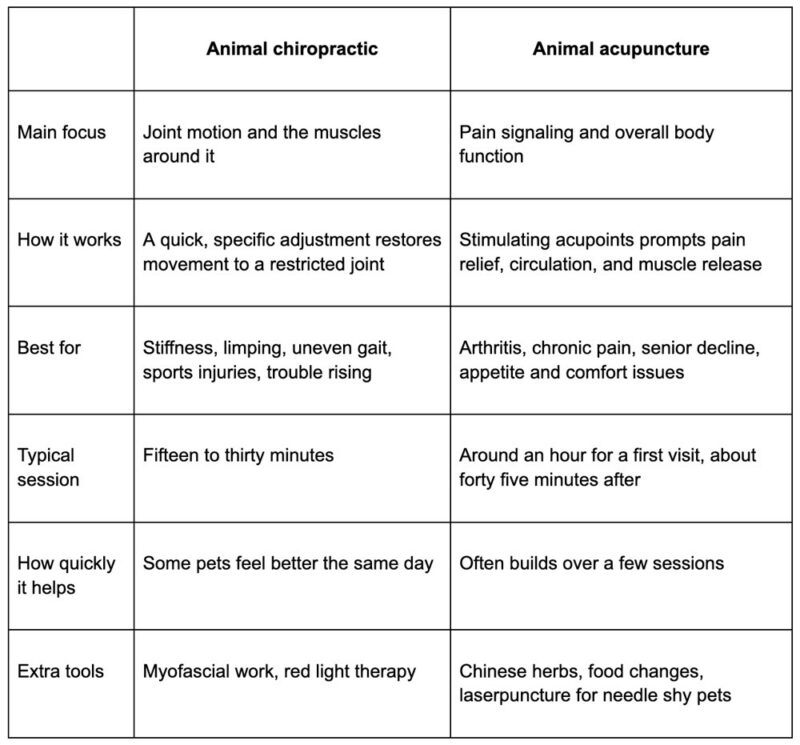
Animal chiropractic helps improve the way your pet’s joints move. Gentle, precise adjustments restore normal joint motion, reduce muscle tension, and support comfortable movement. It is a complementary therapy that works alongside veterinary care to help pets move more freely.
How it supports your pet’s mobility
- Move stiffly after resting.
- Have difficulty jumping, climbing stairs, or getting into the car.
- Show changes in posture or gait.
- Are recovering from orthopedic injuries or surgery, with veterinary approval.
- Need support for age related mobility changes.
- Participate in sports or other physically demanding activities.
Understanding veterinary acupuncture
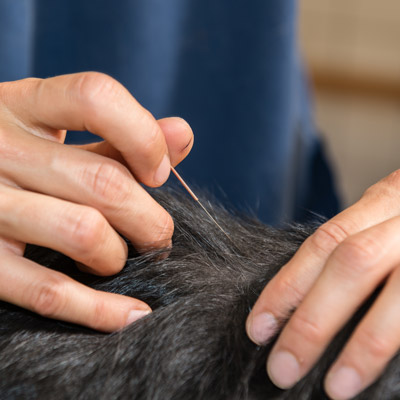
Veterinary acupuncture uses very fine needles to stimulate specific points on the body. This gentle therapy supports the body’s natural healing response, helps reduce pain, improves circulation, and encourages muscle relaxation.
How it supports comfort and healing
- Live with chronic pain or arthritis.
- Need additional support during recovery.
- Experience muscle tension or reduced mobility.
- Are becoming less active as they age.
- Could benefit from a gentle, drug free therapy alongside their veterinary treatment.
Animal chiropractic vs acupuncture at a glance
Which one is right for your pet
Here is how we think it through in practice.
Start with chiropractic if your pet has a clear movement problem. They limp. They will not jump into the car. They yelp when you touch their back. Something in the way they walk changed and you can see it.
Start with acupuncture if your pet has a body wide problem rather than a single sore spot. A twelve year old dog with arthritis in three joints. A cat who has quietly stopped jumping onto the counter. A pet whose pain is constant rather than tied to one movement.
Choose based on your pet, not just the problem. Some dogs are fine with hands on adjusting but hate holding still for needles. Others love their acupuncture nap and tense up at anything quick. We take that seriously, because a stressed animal does not respond well to any therapy.
And if you are unsure, that is exactly what an assessment is for. You do not have to decide before you walk in.
Can animal chiropractic and acupuncture be used together?
Yes. Animal chiropractic and veterinary acupuncture can complement each other because they support the body in different ways. Chiropractic helps improve joint mobility, while acupuncture helps reduce pain, relax muscles, and support the body’s natural healing response.
Not every pet needs both therapies. During your pet’s evaluation, we recommend the approach, or combination of therapies, that best fits their condition, comfort, and your veterinarian’s recommendations.
How we decide, and when we say no
Not every pet needs animal chiropractic or veterinary acupuncture, and that is perfectly okay. The right recommendation always depends on your pet’s condition, medical history, and your veterinarian’s findings.
Supportive therapies work best when they are used for the right reason and at the right time. If your pet would benefit more from medication, diagnostic imaging, surgery, or another medical treatment first, that should always come before chiropractic or acupuncture.
At Tails Animal Chiropractic Care, every recommendation begins with an evaluation, not a treatment plan. Sometimes that means chiropractic. Sometimes it means acupuncture. Sometimes it means both. And sometimes the best next step is simply returning to your veterinarian before moving forward.
Frequently asked questions
Animal chiropractic vs acupuncture: which should I try first?
If the problem is a visible movement change, start with chiropractic. If the problem is long standing pain or age related decline, start with acupuncture. If you cannot tell which it is, an assessment will sort it out.
Is animal acupuncture painful?
Most pets barely notice the needles, which are far thinner than the ones used for shots. Many relax deeply during a session, and some fall asleep.
Can my pet have chiropractic and acupuncture on the same day?
Often yes, and for many pets it is the most efficient way to do it. We will tell you honestly if your pet would do better spacing them out.
How many sessions will my pet need?
It depends on how long the problem has been building. Some pets respond in one or two visits. Older pets with long standing arthritis usually do best with ongoing maintenance care.
Do I need a referral from my veterinarian?
Not to book with us, but we always want your pet’s medical history, and we work alongside veterinarians across northern Colorado.
Not sure which one your pet needs?
If you are still unsure whether animal chiropractic or acupuncture is the better choice, that is okay. Every pet is different, and the best approach depends on their individual needs.
At Tails Animal Chiropractic Care, we offer animal chiropractic, myofascial work, red light therapy, veterinary acupuncture, and Traditional Chinese Veterinary Medicine. After evaluating your pet, we will recommend the approach that best fits their condition.
To schedule an assessment, call us or book online through our schedule page.