
Last Updated on 3 months ago by Dr Alisha Barnes
A sudden limp can be concerning for any dog owner. One common cause is a muscle strain, a soft tissue injury that often shows up after hard play or exercise. While many cases improve with rest, some dogs need evaluation from a vet to rule out more serious issues and support a safe recovery.
Knowing the early signs of muscle injury can help you respond quickly and prevent discomfort from becoming worse. In this guide, we’ll explain what a muscle strain is, the symptoms to watch for, how long recovery may take, and when professional care is recommended.
What is A Muscle Strain in Dogs?
This type of injury occurs when muscle tissue is overstretched during movement or physical activity.
When this happens, the muscle fibers stretch or tear past what they can safely handle.
The injury usually strikes in a single quick moment: a fast sprint, a sharp turn, or a slip on a smooth floor.
A strain can range from a mild muscle injury to a more significant problem affecting comfort and movement.
Many dogs continue walking after the injury, making it easy for owners to miss the early warning signs.
Signs Of Muscle Strain in Dogs
The symptoms of a strain often depend on the location and severity of the injury.
Common signs include:
- A noticeable limp
- Reduced activity
- Stiffness after rest
- Difficulty standing up
- Pain during movement
- Mild swelling
- Changes in posture
- Less interest in exercise
A dog may also show a reluctance to jump, climb stairs, or play as usual.
Some dogs still bear weight on the affected leg but move differently to avoid discomfort.
Pay close attention to changes in movement because a strain can become more difficult to manage if activity continues too soon.
Why Do These Injuries Happen?
Several factors can increase the risk of a muscle strain.
Overexertion
One of the most common causes is overexertion. Dogs that suddenly exercise harder than usual may place excessive stress on their muscles.
High Energy Activity
Active dogs that enjoy running, agility, hiking, or frequent play sessions may be more likely to experience a strain.
Slippery Surfaces
A lack of traction on slippery floors can cause sudden movements that overload muscles.
Age Related Changes
As dogs age, muscles may become less flexible, increasing the likelihood of injury.
When Should You See A Vet For A Limp?
A mild limp may improve with rest, but some situations require prompt veterinary attention.
Contact a vet if your dog:
- Continues limping for more than a few days
- Appears uncomfortable at rest
- Develops visible swelling
- Experiences worsening stiffness
- Begins to refuse to bear weight
- Shows signs that worsen over time
A veterinarian can determine whether the problem is related to a muscle injury or another condition affecting movement.
This step helps rule out more serious causes of lameness and discomfort.
How A Veterinarian Evaluates A Muscle Injury
A veterinarian will typically begin with a physical exam and discuss your dog’s recent activity history.
The evaluation may include:
- Observing walking patterns
- Assessing range of motion
- Checking for tenderness
- Evaluating overall comfort
- Looking for signs of inflammation
In some cases, an x-ray may be recommended to rule out fractures or identify concerns involving underlying joint issues.
An x-ray can also help assess conditions such as arthritis, which may cause symptoms similar to a strain.
How A Strained Muscle Is Treated
The best treatment options depend on the severity of the injury and veterinary recommendations.
Rest And Supportive Care
Most mild strains respond well to rest and supportive care.
This often involves limiting your dog’s activity, keeping walks short and on a leash, and avoiding jumping or other strenuous exercise. With several days of rest and careful activity management, many dogs begin to show steady improvement as the injured muscle heals.
One important note: never give your dog human pain medication, as common products like ibuprofen can be harmful to pets. Your veterinarian can recommend safe options if pain relief is needed.
Cold Therapy
During the first 48 hours, cold therapy may help reduce swelling and improve comfort.
Managing pain and swelling early can support the natural healing process.
Recovery Support
The goal is to allow the injured muscle to heal without additional stress.
A personalized treatment plan may be recommended when symptoms are more persistent.
How Long Does A Muscle Strain Take To Heal?
Recovery times vary depending on the injury.
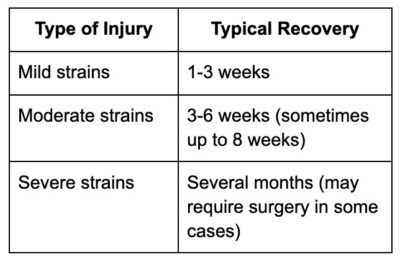
Many mild muscle strains improve steadily with proper care.
More significant injuries may take additional time to fully heal.
Returning to intense activity too soon can delay recovery and increase the chance of re-injury.
Supporting Mobility During Recovery
Maintaining safe movement is an important part of recovery.
A dog recovering from a strain may benefit from strategies that support mobility while limiting excessive activity.
This may include:
- Controlled walks
- Appropriate exercise progression
- Comfortable resting areas
- Monitoring daily activity
The focus should always be on helping the body heal naturally while avoiding unnecessary stress.
Some dogs also benefit from gentle, mobility focused support, such as animal chiropractic care, once your veterinarian confirms the injury is healing well.
See more: How to Check Your Dog’s Mobility at Home (Simple Step-by-Step Guide)
How To Prevent Muscle Strains In Your Dog
Prevention starts with consistent exercise habits and proper conditioning.
Helpful strategies include:
- Gradually increasing activity levels
- Maintaining a healthy weight
- Providing regular exercise
- Allowing recovery after intense activity
- Creating safer indoor surfaces
These habits help reduce the risk of future injuries.
Supporting Long-Term Muscle Health
Good conditioning supports overall muscle health and movement quality.
Regular activity can help maintain strength, flexibility, and healthy mobility throughout life.
Monitoring Recovery At Home
Recovery requires patience and observation.
Dog owners should keep a close eye on:
- Walking patterns
- Energy levels
- Movement and behavior
- Comfort during activity
- Changes in appetite
If symptoms persist or if your dog shows signs of worsening discomfort, contact your veterinarian.
These small daily check-ins help keep recovery on track and protect your dog’s long term health.
Conclusion
A muscle strain in dogs is a common cause of a limp, especially after exercise, play, or unexpected movement. Recognizing symptoms early allows you to act quickly and support recovery.
Most mild cases will heal with rest and activity modification. However, persistent symptoms should always be evaluated by a veterinarian. With proper care and attention to movement quality, dogs can often return to their normal routines safely and comfortably.
Learn more about mobility focused care and canine wellness at Tails Animal Chiropractic Care.
Frequently Asked Questions
Can a pulled muscle cause a dog to limp?
Yes. A pulled muscle can cause discomfort, reduced movement, and a noticeable limp.
How can I tell if my dog has a muscle strain?
Common symptoms include stiffness, reduced activity, pain during movement, and a sudden limp after exercise or play. These signs usually appear within a day of the activity that caused the injury.
How long until my dog can play normally again?
Most dogs feel better within a few weeks, but the muscle keeps healing even after the limp disappears. Giving your dog a little extra rest past the point of “looking fine” helps prevent re-injury.
Can chiropractic care help support recovery?
Yes, once your veterinarian has examined your dog. Gentle chiropractic care can support comfortable movement and healthy mobility as part of a broader recovery plan.
What can dog owners do to reduce the risk of future injuries?
You can reduce the risk by maintaining regular exercise, managing weight, providing safe footing, and avoiding sudden increases in activity. A short warm-up walk before hard play also helps prepare the muscles.