
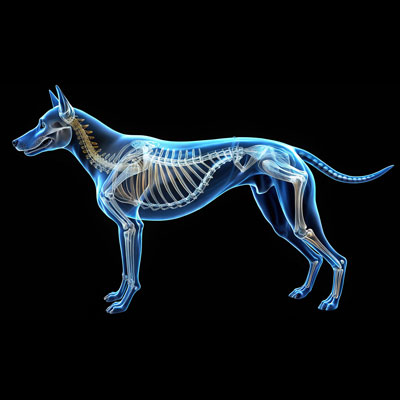
Degenerative disc disease in dogs affects the discs that sit between the bones of the spine. As these discs change, they can lose flexibility and become more vulnerable to damage. Some dogs develop back or neck pain, stiffness, or changes in movement. More serious cases can affect the spinal cord and cause weakness or loss of coordination.
At Tails Animal Chiropractic, we look at how changes in spinal comfort and mobility affect the way an animal stands, walks, and uses the rest of the body. Supportive care may be appropriate for some dogs, but veterinary evaluation is important when disc disease is suspected.
What is degenerative disc disease in dogs?
A dog’s spine is made up of individual bones called vertebrae. Between most vertebrae are intervertebral discs, which provide cushioning and help the spine move.
With degenerative disc disease, the structure of a disc gradually changes. It may become less flexible and less effective at absorbing normal forces. As degeneration progresses, the disc can become weaker and more vulnerable to damage.
These changes may develop gradually over time. In some dogs, a weakened disc can eventually become damaged or rupture. If disc material puts pressure on the spinal cord or nearby nerves, symptoms can become more serious and may affect strength, coordination, and normal movement.
Not every dog develops the same problems. The location of the affected disc, the severity of the changes, and whether the spinal cord is involved all influence the signs an owner may notice.
Signs and symptoms of degenerative disc disease in dogs
Early signs may look like simple stiffness or reluctance to move. Other dogs develop more obvious changes in walking or coordination.
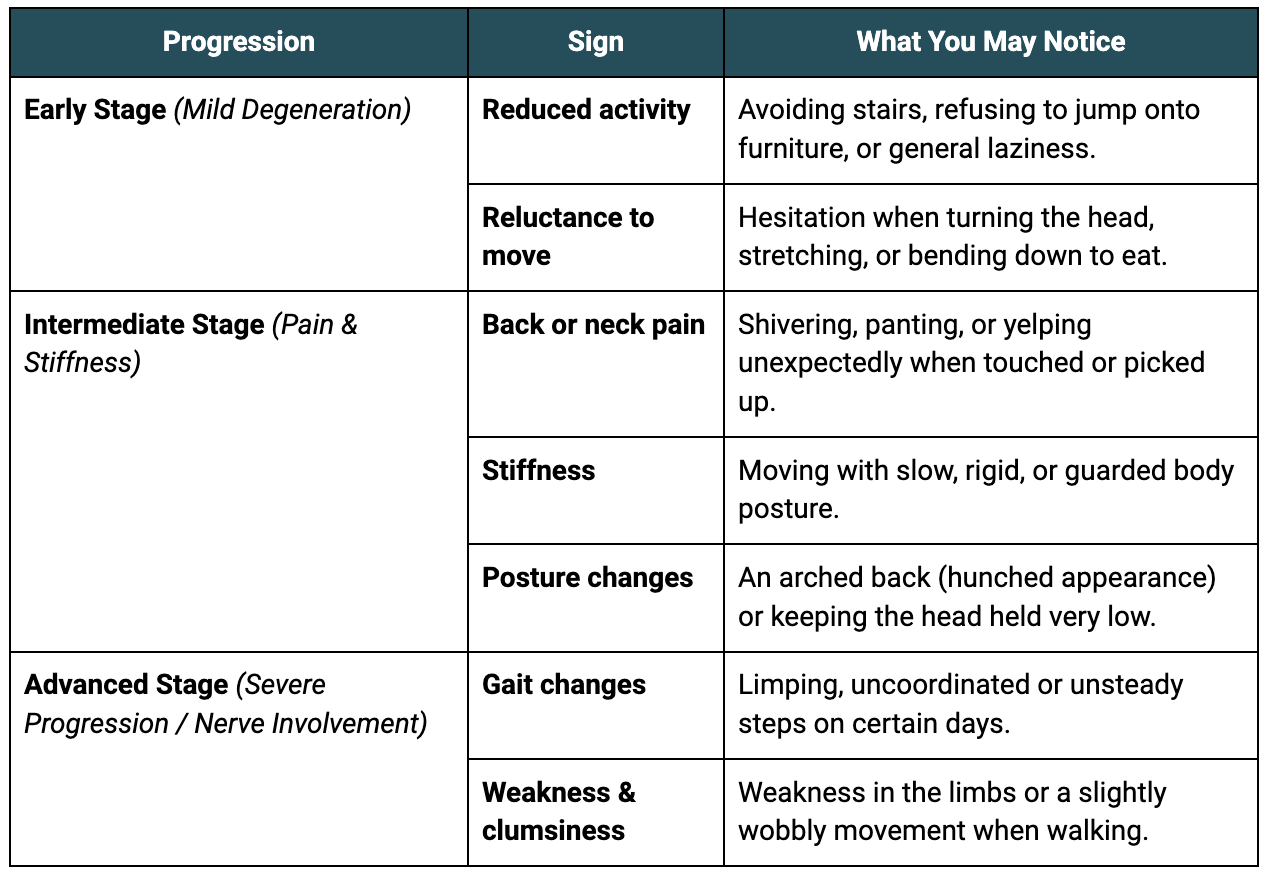
Changes in walking can have many possible causes. Gait abnormalities in dogs may develop from orthopedic, muscular, spinal, or neurological problems, so movement changes alone cannot confirm disc disease.
What causes degenerative disc disease in dogs?
Degenerative disc disease usually develops over time rather than from a single injury. Several factors can contribute to how and when the discs begin to change.
Common factors associated with disc degeneration include:
- Genetics and breed predisposition. Some dogs inherit traits that make their intervertebral discs more likely to degenerate, sometimes at a relatively young age.
- Age related changes. The structure and flexibility of spinal discs can change as a dog gets older, making them less effective at cushioning movement.
- Changes in disc structure. As a disc loses its normal flexibility and strength, it becomes more vulnerable to further damage or rupture.
- Underlying spinal degeneration. Changes may develop gradually for months or years before obvious pain or mobility problems appear.
Symptoms sometimes become noticeable after jumping, playing, or another physical activity. However, the activity itself may not be the underlying cause. A disc may already have been degenerating before the dog begins to show signs.
How degenerative disc disease in dogs is diagnosed
A veterinary evaluation usually begins with the dog’s history and symptoms. The examination may assess pain, posture, movement, strength, coordination, and reflexes.
Imaging may be needed to better understand changes within the spine. X-rays can identify some spinal changes, while more advanced imaging may be considered when greater detail about the discs, spinal cord, or surrounding structures is needed.
Because similar symptoms can occur with other musculoskeletal and neurological conditions, an accurate diagnosis helps determine the severity of the problem and what type of care may be appropriate.
How animal chiropractic may support movement
A painful or stiff area of the spine can change how a dog uses the rest of the body. A dog may shorten its stride, shift weight, move more cautiously, or place additional demands on other joints and muscles.
Animal chiropractic considers these movement relationships. An assessment may look at how the dog stands, walks, distributes weight, and moves through different regions of the body.
When appropriate, chiropractic care may support joint mobility, stiffness, and compensatory movement patterns.
It is important to separate this supportive role from treatment of the disc itself. Chiropractic care cannot reverse degeneration within an intervertebral disc or relieve serious spinal cord compression. Dogs with significant neurological signs require appropriate veterinary evaluation first.
Similar considerations apply when using chiropractic care for dogs with neurological disorders. The goal is to support the musculoskeletal effects of changing movement rather than claim to repair damaged nerves or treat the underlying neurological disease.
Where cold laser therapy may fit
Tails also offers cold laser therapy for dogs as a supportive modality.
Cold laser therapy uses specific wavelengths of light and may be incorporated into care to support comfort and tissue response when appropriate. Whether it is suitable depends on the dog’s condition and examination findings.
Like chiropractic care, cold laser therapy should not be presented as a way to rebuild a degenerated disc. Its role should fit within the broader care plan for the individual dog.
When your dog needs veterinary care first
Some signs require prompt veterinary attention rather than waiting for supportive care. These include:
- Sudden or rapidly worsening weakness.
- Inability to stand or walk.
- Severe or rapidly increasing pain.
- Significant loss of coordination.
- Partial or complete paralysis.
- Loss of normal bladder or bowel control.
These signs may indicate significant spinal cord involvement. The severity of neurological dysfunction can affect both treatment decisions and prognosis.
Helping a dog with disc disease at home
Home care should follow the recommendations provided for your dog’s condition. Depending on veterinary guidance, this may include reducing uncontrolled jumping, limiting stairs, providing nonslip surfaces, and maintaining a healthy body weight.
Watch for changes in gait, posture, strength, and willingness to move. Avoid trying to manipulate the spine or perform aggressive stretches at home because what appears to be simple stiffness may have a more serious cause.
Frequently asked questions
Is degenerative disc disease painful for dogs?
It can be. Some dogs develop back or neck pain and stiffness. Others may develop neurological signs when the spinal cord or nearby nerves are affected.
Can degenerative disc disease cause paralysis in dogs?
Yes. Significant spinal cord involvement can cause weakness, loss of coordination, or paralysis. Sudden difficulty standing or walking requires prompt veterinary evaluation.
Can dogs recover from degenerative disc disease?
Many dogs can improve with appropriate management, but the outcome depends on the severity and neurological involvement. Improvement in symptoms does not necessarily mean the underlying disc degeneration has been reversed.
Can dogs with degenerative disc disease exercise?
Exercise may be possible, but the type and amount should depend on the dog’s condition and stage of recovery. Dogs with acute symptoms may need activity restriction before returning gradually to appropriate movement.
Can chiropractic reverse degenerative disc disease in dogs?
No. Chiropractic cannot restore a degenerated disc to its original structure. When appropriate, it may instead support joint mobility, stiffness, and compensatory movement patterns.
Supporting your dog’s movement and comfort
Degenerative disc disease can range from mild discomfort and stiffness to serious changes in strength and coordination. Identifying the cause and severity of these symptoms is the first step toward choosing appropriate care.
At Tails Animal Chiropractic, we consider how spinal discomfort and mobility changes affect movement throughout the body. When supportive care is appropriate, animal chiropractic and cold laser therapy may be incorporated with a focus on mobility, comfort, and compensation. You can contact us to discuss whether supportive care may be appropriate for your dog.