
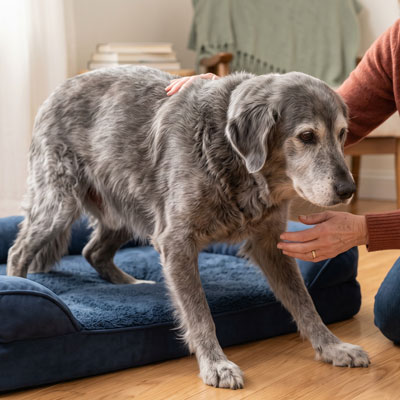
Natural mobility support for senior dogs can help aging pets stay active and comfortable as their bodies change. If your dog moves more slowly, struggles to stand, or avoids stairs, simple changes to their daily routine may help.
At Tails Animal Chiropractic Care, we understand how important comfortable movement is to your dog’s quality of life. Here are practical ways to support your senior dog’s mobility and recognize when professional care may be needed.
Understanding mobility changes in senior dogs
As dogs age, their joints, muscles, and overall strength can change. Some dogs gradually slow down, while others develop stiffness or difficulty with everyday movements.
Common causes of mobility decline
Several conditions can affect how comfortably your senior dog moves:
- Arthritis: Joint inflammation and damage can cause pain, stiffness, and reduced movement.
- Muscle weakness: Aging dogs may lose muscle mass, making standing, walking, and climbing more difficult.
- Previous injuries: Old injuries can contribute to ongoing discomfort or movement problems.
- Spinal and nerve conditions: Problems affecting the spine or nerves may cause weakness, pain, or poor coordination.
Not every mobility change is caused by aging. A veterinary examination can help identify the underlying problem.
Signs your senior dog may need mobility support
Watch for changes in your dog’s daily activities, including:
- Difficulty standing after resting.
- Stiffness when walking.
- Reluctance to climb stairs or jump.
- Slower walks or frequent stops.
- Limping or uneven steps.
- Reduced interest in playing.
If you notice your senior dog slowing down, pay attention to when the changes occur and whether they are getting worse.
Diet and supplements for senior dog joint health
Proper nutrition helps senior dogs maintain muscle strength, manage their weight, and support overall health.
Maintaining a healthy weight
Extra weight places additional stress on your dog’s joints, especially the hips, knees, and elbows. For dogs with arthritis, maintaining a healthy weight may help improve comfort and mobility.
To support healthy weight management:
- Feed balanced meals appropriate for your dog’s age and health.
- Measure food portions instead of guessing.
- Limit high calorie treats.
- Ask your veterinarian about your dog’s ideal weight.
Avoid sudden dietary restrictions, especially if your senior dog is already losing muscle.
Natural supplements for joint support
Some supplements may help support joint health, although their effectiveness varies.
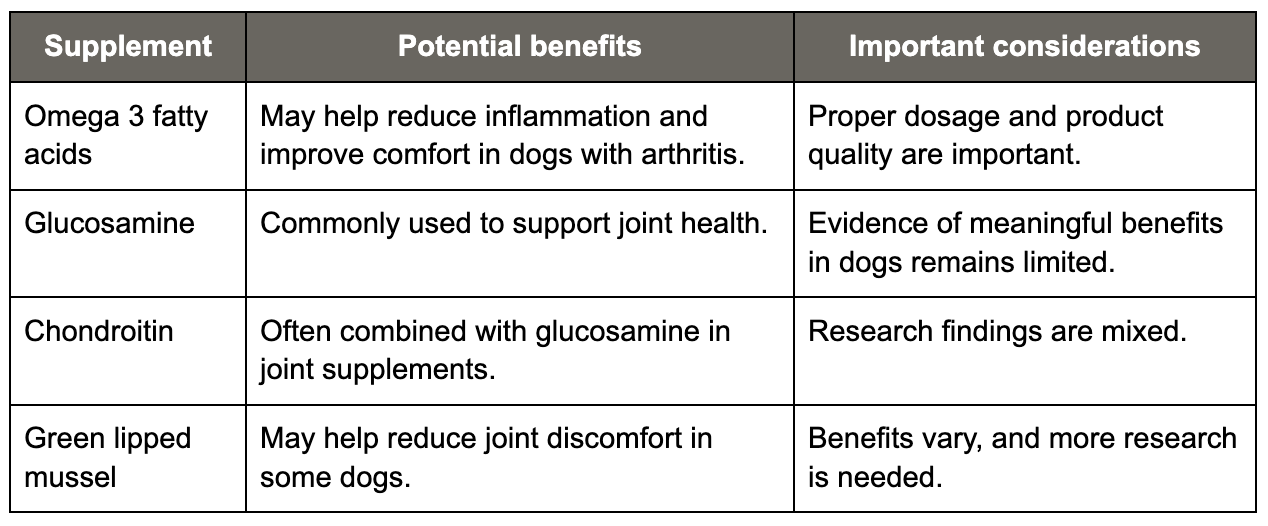
Supplements are not a replacement for veterinary treatment. Always check with your veterinarian before adding them to your dog’s diet, particularly if your dog takes medication.
Making your home safer for an aging dog
A comfortable home environment can make everyday movement easier for dogs with stiff joints or reduced strength.
Preventing slips and falls
Slippery floors can make walking difficult, especially for dogs with weak hind legs.
Consider these adjustments:
- Non-slip rugs: Add traction to hardwood or tile floors.
- Traction mats: Place them near food bowls, doorways, and resting areas.
- Clear pathways: Remove objects that could cause your dog to trip.
- Nail care: Keep nails at a comfortable length to support better footing.
These changes may help your dog move with greater confidence.
Creating comfortable and accessible spaces
Small adjustments can reduce unnecessary strain on your dog’s joints.
- Ramps: Help your dog access appropriate elevated areas without jumping.
- Supportive bedding: Provide a comfortable place to rest.
- Accessible essentials: Keep food, water, and sleeping areas easy to reach.
- Fewer stairs: Limit repeated stair climbing if it causes discomfort.
Choose adjustments based on your dog’s size, mobility, and daily needs.
Gentle exercises and natural mobility support
Regular movement helps maintain muscle strength and joint function. However, the type and amount of exercise should match your senior dog’s physical abilities.
Short walks and low impact activities
Short, comfortable walks are often a good starting point for older dogs.
To make walking easier:
- Start with short distances on level ground.
- Allow your dog to walk at a comfortable pace.
- Take breaks when needed.
- Avoid slippery surfaces and rough terrain.
- Gradually adjust activity based on your dog’s response.
Several short walks may be more comfortable than one long outing.
If your dog becomes noticeably lame, weak, or painful, stop the activity and seek veterinary advice.
Massage and canine rehabilitation
Gentle massage may help some senior dogs relax, while professionally guided rehabilitation exercises can support muscle strength, balance, and movement.
Depending on your dog’s condition, a veterinary rehabilitation professional may recommend:
- Gentle range of motion exercises.
- Controlled strengthening activities.
- Balance and coordination exercises.
- Hydrotherapy or underwater treadmill sessions.
These activities should be selected based on your dog’s diagnosis and physical abilities.
Avoid stretching painful joints or attempting rehabilitation exercises without appropriate guidance.
How animal chiropractic care may support senior dogs
Animal chiropractic care focuses on assessing joint movement, spinal function, and how your dog moves. For some senior dogs, it may be considered as part of a broader mobility care plan.
At Tails Animal Chiropractic Care, our Senior Dog Wellness program includes chiropractic adjustments, stretching, and soft tissue work tailored to older dogs.
Before recommending care, we consider your dog’s health history, movement patterns, and physical limitations. Our goal is to determine whether gentle chiropractic techniques may be appropriate for their needs.
However, research on chiropractic treatment for canine mobility problems remains limited. Chiropractic care should complement veterinary treatment, not replace it. Dogs with arthritis, spinal disease, or neurological symptoms need appropriate veterinary evaluation before manual treatment.
When to seek veterinary care for mobility problems
Some mobility changes develop gradually, while others require immediate attention.
Schedule a veterinary appointment if your dog:
- Has persistent stiffness or limping.
- Struggles to stand after resting.
- Avoids activities they previously enjoyed.
- Shows increasing discomfort during movement.
Seek urgent veterinary care if your dog:
- Suddenly becomes unable to stand or walk.
- Develops sudden leg weakness or paralysis.
- Cries out in severe pain.
- Suddenly loses coordination or drags their legs.
Do not assume these symptoms are simply part of aging. Early evaluation can help identify conditions that need treatment.
Helping your senior dog stay active and comfortable
Supporting your senior dog’s mobility starts with understanding their changing needs. Gentle exercise, balanced nutrition, home adjustments, and regular veterinary care can all contribute to a more comfortable daily routine.
At Tails Animal Chiropractic Care, we offer individualized animal chiropractic services for dogs with mobility concerns. When appropriate, these services may complement your dog’s existing veterinary care plan.
If you’re exploring additional support for your aging dog, contact us to discuss whether animal chiropractic care may be suitable for their needs.
Frequently asked questions about senior dog mobility
What is the best natural mobility support for senior dogs?
Gentle exercise, healthy weight management, supportive bedding, and a safe home environment can help maintain mobility.
How can I help my stiff senior dog stand up?
Use non-slip surfaces or a support harness. If your dog continues struggling, consult your veterinarian.
What exercises are safe for senior dogs with joint pain?
Short walks and veterinarian-approved rehabilitation exercises may help maintain strength and mobility without overworking painful joints.
Can chiropractic care improve mobility in older dogs?
Chiropractic care may provide complementary support for some dogs, but evidence is limited. Veterinary evaluation is recommended first.
Can natural supplements replace pain medication for dogs?
No. Supplements cannot reliably replace prescribed medication. Dogs with painful conditions may still need veterinary treatment.