
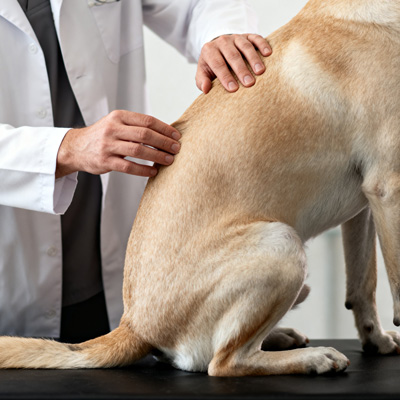
You may first notice a neurological problem through changes in the way your dog moves, such as weak back legs, poor balance, dragging a paw, or difficulty getting up. These changes can also affect posture, joint movement, and how the rest of the body compensates.
Chiropractic care for dogs with neurological disorders focuses on supporting these changing movement patterns. By addressing spinal mobility, joint function, muscle tension, and physical compensation, animal chiropractic may help dogs move more comfortably when appropriate.
How neurological disorders affect a dog’s movement
The nervous system controls movement, balance, reflexes, and sensation. When communication between the brain, spinal cord, and nerves is disrupted, a dog may develop weak back legs, an unsteady gait, trouble getting up, poor balance, paw dragging, or changes in posture.
These changes are not always neurological. Joint, muscle, and other health problems can look similar, which is why the underlying cause matters.
Small neurological changes can affect the whole movement pattern
Even a small change in strength or coordination can affect how a dog uses the rest of the body. Weak back legs may cause more weight to shift toward the front legs, while reduced control of one limb may make the dog rely more heavily on the opposite side.
Over time, the pattern may look like this:
Weakness → altered gait → compensation → posture changes → added demands on muscles and joints
These early changes can be easy to miss. A dog that takes longer to stand, shifts weight before rising, or needs more effort to get up may already be showing subtle mobility changes. Understanding what trouble rising in dogs can look like can make these signs easier to recognize early.
Common neurological disorders that can affect mobility
Neurological disorders affect different areas of the nervous system, so the way they change movement can vary. Some conditions have a particularly noticeable effect on mobility.
Intervertebral disc disease
Intervertebral disc disease (IVDD), affects the discs between the vertebrae. When damaged disc material affects the spinal cord or nearby nerves, a dog may experience changes in movement.
According to Cornell University College of Veterinary Medicine, signs can include weakness in the back legs, paw dragging, poor coordination, neck or back pain, and paralysis. Because IVDD can range from mild discomfort to serious neurological problems, the condition should be properly evaluated before supportive care is considered.
Degenerative myelopathy
Degenerative myelopathy is a progressive neurological disease that affects the spinal cord. Dogs may gradually lose strength and coordination, especially in the back legs, making standing, walking, and balancing more difficult over time.
Other spinal, orthopedic, and neurological conditions can produce similar signs, so these movement changes alone cannot confirm degenerative myelopathy.
Other neurological conditions
Neurological conditions do not always affect movement in the same way. Vestibular disorders may cause poor balance, head tilt, stumbling, or falling, while seizure disorders affect brain activity and produce very different symptoms.
This difference is important because there is no single approach that is appropriate for every dog with a neurological condition.
Why veterinary diagnosis comes before chiropractic care
Weakness, changes in gait, and trouble standing can have different causes. A veterinarian may assess movement, strength, reflexes, and coordination to determine whether the nervous system or another part of the body is involved.
The Merck Veterinary Manual explains that a neurological examination can help identify which area of the nervous system may be affected. Once the underlying problem is understood, supportive chiropractic care can be considered when appropriate.
How chiropractic care may support dogs with neurological conditions
Animal chiropractic does not treat neurological disease. When appropriate, it may support changes in mobility, posture, and movement that develop as a dog adapts to a neurological condition. Rather than focusing only on the area of weakness, chiropractic care looks at how the dog’s overall movement pattern has changed.
Supporting areas that compensate for weakness
When one part of the body becomes weaker, other areas often take on more work. A dog losing strength in the back legs, for example, may shift more weight toward the front legs for stability. This changes how the shoulders, front limbs, back, and surrounding muscles are used.
Chiropractic care does not correct the neurological condition causing the weakness. Instead, supportive care may focus on the joints and muscles adapting to these changing movement patterns. The neurological problem and the physical compensation around it are related, but they are not the same thing.
Supporting joint and spinal mobility
A dog with a neurological condition may also develop stiffness or restricted movement as gait and posture change. Animal chiropractic focuses on this mobility side of the picture by supporting comfortable joint and spinal movement when appropriate.
Animal chiropractors in Colorado may take a whole body approach by looking at how a dog stands, walks, distributes weight, and compensates during movement. The goal is not to restore damaged nerves or reverse neurological disease, but to support the parts of the body affected by changing movement patterns.
Supporting comfort and quality of life
For dogs with ongoing mobility challenges, supportive care may help maintain comfortable movement and address muscle tension or joints that are taking on extra work. The goal is to support mobility and quality of life within the needs and limitations of each dog’s condition.
When chiropractic care may not be appropriate
Chiropractic care should not replace urgent veterinary treatment. Sudden paralysis, rapidly worsening weakness, inability to stand, major trauma, severe pain, repeated or prolonged seizures, loss of consciousness, or severe loss of coordination require prompt veterinary attention.
Even with a diagnosis, chiropractic care may not be appropriate for every dog or every stage of a neurological condition. The decision depends on the dog’s diagnosis, current condition, and individual mobility needs.
Supporting dogs through neurological mobility changes
Neurological conditions can change the way a dog moves and uses the rest of the body. Tails Animal Chiropractic Care offers animal chiropractic, acupuncture, myofascial work, and other supportive services focused on comfortable movement and individual mobility needs. If your dog already has a diagnosis, you can contact us to discuss whether supportive care may be appropriate.
Frequently asked questions
Can chiropractic care treat neurological disorders in dogs?
No. Animal chiropractic does not treat or cure neurological disease. When appropriate, it may support joint mobility, posture, muscle function, and movement patterns affected by physical compensation.
Can chiropractic help a dog with hind leg weakness?
It depends on the cause. Neurological, orthopedic, muscular, and other conditions can cause hind leg weakness. The underlying problem should be identified before chiropractic care is considered.
Can chiropractic help a dog with IVDD?
IVDD can range from mild movement changes to serious spinal cord problems. Whether chiropractic or another supportive approach is appropriate depends on the location, severity, and individual condition of the dog.
Why can neurological problems change a dog’s posture?
Weakness or reduced coordination can cause a dog to shift weight and use other parts of the body differently. Over time, these compensations can affect posture, gait, joint movement, and muscle workload.
Is chiropractic safe for dogs with neurological conditions?
It depends on the diagnosis and current condition. Chiropractic care should only be considered when it is appropriate for the individual dog’s neurological and mobility needs.