
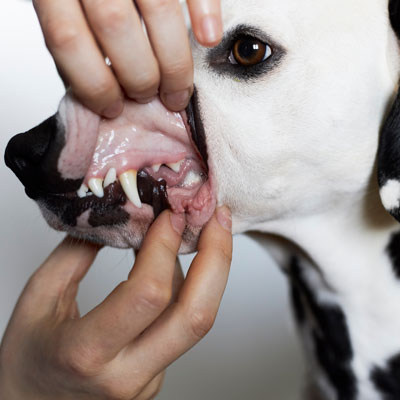
Jaw pain in dogs can come from the teeth and gums, an injury, the jaw joint, surrounding muscles, or another medical condition. You may first notice something is wrong when your dog chews differently, drops food, avoids hard treats, or pulls away when the face is touched.
These changes can point to discomfort, but they cannot tell you exactly where the problem starts. Finding the cause matters because a painful tooth, jaw injury, and movement related problem require different types of care.
What could be causing jaw pain in dogs?
Jaw pain does not always mean the jaw joint itself is the problem. The teeth, gums, jaw bones, joints, muscles, and other tissues around the mouth can all be involved. Some common possibilities include:
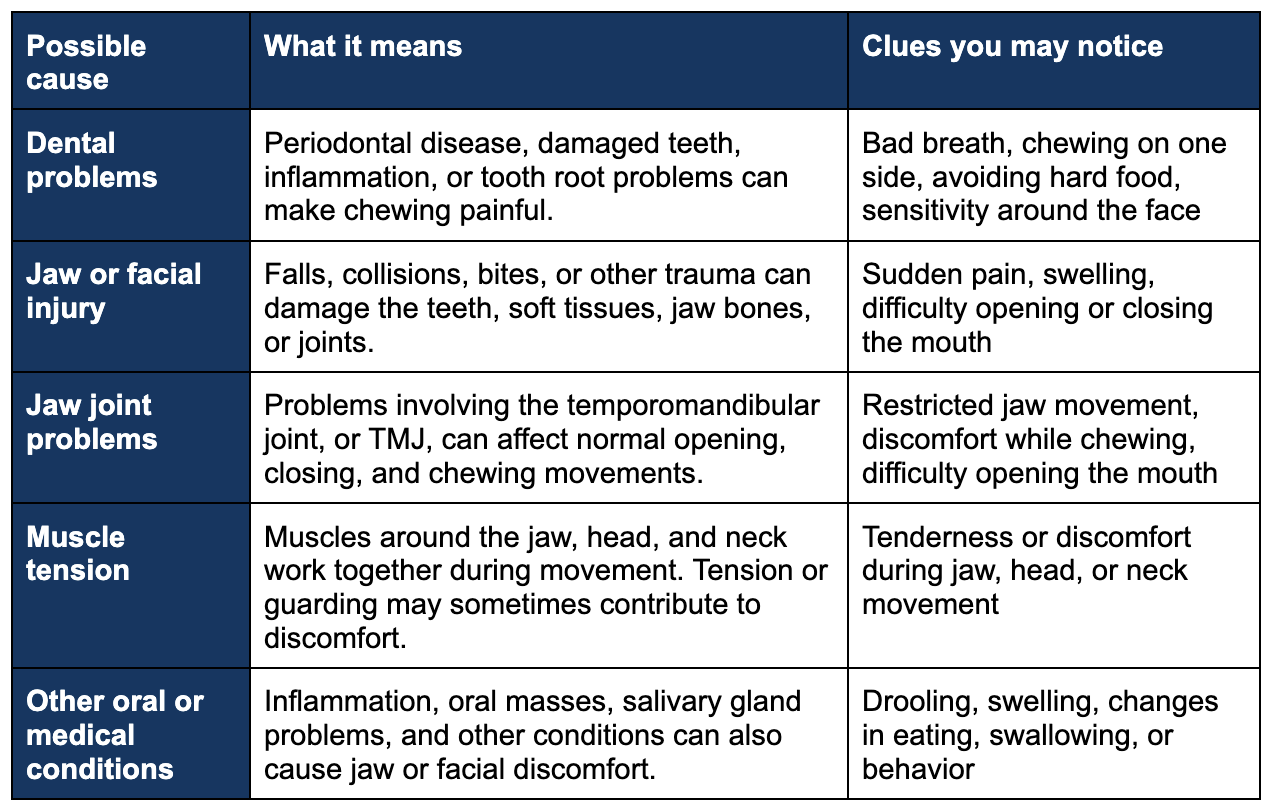
Many of these conditions can cause similar symptoms, so the signs alone cannot confirm what is causing your dog’s jaw pain. Dental disease, significant trauma, and other medical problems may require veterinary evaluation before musculoskeletal care is considered.
How to tell if your dog’s jaw hurts
Mealtime gives you the clearest window. Watch for:
- Dropping food or struggling to pick it up
- Chewing slowly, or only on one side
- Turning away from hard kibble, bones, or chew toys
- Extra drooling, sometimes with a pink tinge
- Pawing or rubbing at the muzzle
- Pulling back when you touch the cheek or under the chin
- Trouble opening wide for a yawn or a ball
- Puffiness along one side of the face
Appetite alone is a poor guide. Plenty of dogs keep eating through real discomfort because food matters more to them than a sore mouth. Pay attention to how your dog moves as well. Hesitating before lowering the head to the bowl, reluctance to turn the neck, or an odd sideways motion while chewing suggests the pain reaches beyond the mouth itself.
Some of these clues call for a phone call today, and a few call for a visit within the hour.
When does jaw pain need veterinary care first?
Call your vet promptly if your dog:
- Cannot open or close the mouth normally
- Refuses to eat or drink
- Has noticeable swelling on the face
- Is bleeding from the mouth
- Has a broken, loose, or missing tooth
- Started hurting after a fall, fight, or accident
- Seems to be getting worse by the hour
The vet will look at the teeth and gums, feel along the jaw and skull, and check how far the mouth opens. Dental X-rays or other imaging often follow, since roughly half of every tooth sits hidden below the gum line where problems love to start. Blood tests help confirm masticatory muscle myositis when the muscles are involved.
What you can do at home for jaw pain
While you wait for the appointment, a few simple steps keep your dog comfortable and safe:
- Switch to soft food. Soak the kibble in warm water or offer a spoonable wet food so eating takes less effort.
- Put the chew toys and bones away for now. Extra chewing irritates a sore mouth.
- Skip the mouth checks. Prying the jaws open to look inside hurts and rarely tells you anything the vet cannot see better.
- Never give human pain relievers. Ibuprofen, naproxen, and acetaminophen are toxic to dogs, even in small amounts. Only use medication your veterinarian prescribes.
- Keep the face calm. Gentle petting is fine, but hold off on tug games, fetch, and rough play.
These steps ease the discomfort, but they do not fix the reason behind it. That depends entirely on what the vet finds.
Where animal chiropractic fits in
Animal chiropractic supports dogs whose lingering discomfort comes from stiff joints or tight muscles rather than from teeth or infection.
At Tails Animal Chiropractic Care, Dr. Alisha Barnes, DC, certified in animal chiropractic through the American Veterinary Chiropractic Association, looks at how the whole body moves together instead of zeroing in on one sore spot. A dog that has been chewing on one side for weeks often carries that strain into the neck and upper back, so the assessment covers the jaw hinge, the skull, the neck, the spine, and the joints that connect them. Knowing what happens during a canine chiropractic session takes the mystery out of that first visit.
We work alongside your veterinarian, never in place of one. Infected teeth, gum disease, fractures, oral masses, and immune conditions belong with the vet. Our role begins after those are handled, and the goal is simple: help your dog open wide, chew evenly, and turn the head without wincing.
Steps to take if your dog’s jaw starts hurting
Start with quiet observation. Note which side your dog chews on, whether anything looks swollen, and whether the trouble began after a specific bump or fight. Switch to soft food and put the chews away.
Book a veterinary exam if the signs last more than a day or two, or right away if any of the urgent signs above appear. The vet sorts out whether the problem is dental, an injury, a muscle disease, or the joint itself.
Once the medical side is settled and your dog still moves stiffly, contact us to talk through whether gentle movement support belongs in the recovery plan. Many dogs go from cautious nibbling back to happy crunching within a few weeks of the right combination of care.
Frequently asked questions about jaw pain in dogs
Why is my dog suddenly having trouble opening their mouth?
Pain, trauma, jaw joint problems, muscle disorders, and other medical conditions can interfere with opening the mouth. A sudden or significant change should be evaluated by a veterinarian.
Why does my dog chew food on only one side?
A dog may favor one side when the other side is uncomfortable. Dental problems are one possible cause, but other mouth or jaw conditions should also be considered.
Can chiropractic help with jaw pain in dogs?
Animal chiropractic may provide supportive care when an appropriate musculoskeletal or movement related problem is present. Dental disease, infection, fractures, and other medical causes require appropriate veterinary care.