
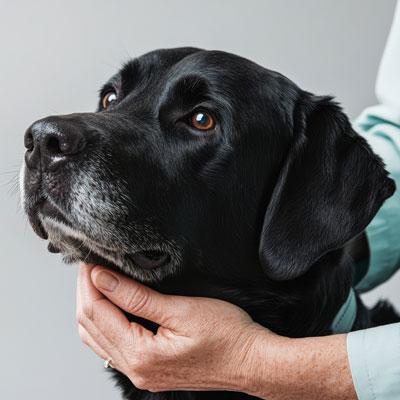
The signs your dog needs a chiropractor may include stiffness, limping, difficulty jumping, or changes in posture. These symptoms can suggest discomfort in your dog’s muscles, joints, or spine, but they can also have other causes.
At Tails Animal Chiropractic Care, we help pet owners understand their dogs’ mobility concerns and explore whether chiropractic care may be appropriate.
7 signs your dog may need chiropractic care
Dogs cannot tell us when something hurts. Instead, they may show discomfort through changes in movement, posture, or behavior.
Here are seven signs worth paying attention to.
1. Stiffness after sleeping or resting
Does your dog seem stiff when getting up from a nap? You might notice that your dog takes longer to stand, walks slowly at first, or needs a few minutes to move comfortably.
Common signs include:
- Difficulty getting up from a lying position.
- Stiff or slow movements after resting.
- Shorter steps during the first few minutes of walking.
- Reluctance to stretch or change positions.
Stiffness can be associated with muscle tension, arthritis, or joint problems. If it happens regularly, a veterinary evaluation can help identify the cause and whether additional care may be helpful.
2. Difficulty jumping or climbing stairs
Dogs that once jumped onto the couch or climbed stairs easily may suddenly hesitate or avoid these activities.
You might notice your dog:
- Refusing to jump into the car.
- Pausing before climbing stairs.
- Needing help getting onto furniture.
- Avoiding movements that require pushing off the back legs.
These changes may indicate discomfort in the back, hips, knees, or other joints.
Because jumping and climbing require coordinated movement, difficulty with these activities can be an early sign of a mobility problem.
3. Limping or unusual walking patterns
Changes in how your dog walks can indicate pain, weakness, or difficulty moving comfortably.
Some dogs develop an obvious limp. Others show more subtle changes, such as taking shorter steps or shifting weight away from one leg.
Watch for:
- Limping on one or more legs.
- Uneven steps while walking.
- Stiff movements when turning.
- Favoring one side of the body.
These changes are often described as dog lameness.
Limping can result from injuries, arthritis, joint conditions, or neurological problems. A veterinarian should evaluate persistent or sudden limping before chiropractic care is considered.
4. Sensitivity when touched around the back or neck
Dogs experiencing discomfort may become sensitive when certain areas of their bodies are touched.
For example, your dog might pull away when you stroke their back, turn their head when you touch their neck, or become uncomfortable when being picked up.
Other signs include:
- Whining or yelping when touched.
- Tensing the body during petting.
- Avoiding contact around the spine.
- Reacting differently to normal handling.
These behaviors may indicate pain or sensitivity involving muscles, joints, or other structures.
Avoid pressing, stretching, or attempting to adjust the painful area yourself. A veterinary examination can help determine what is causing the discomfort.
5. Changes in posture or sitting habits
Your dog’s posture can provide clues about how comfortably they move and support their body.
Some dogs develop a rounded or arched back, while others begin sitting or standing differently.
Possible changes include:
- Arched back: Your dog holds their back in a rounded position.
- Unusual sitting posture: Your dog consistently sits with one leg extended or shifts weight to one side.
- Uneven standing position: Your dog places more weight on certain legs.
- Lowered head position: Your dog avoids lifting or turning their neck normally.
An unusual sitting position alone does not necessarily indicate a health problem. However, new or persistent changes, especially when accompanied by pain or stiffness, deserve attention.
6. Muscle weakness or uneven weight distribution
Muscle weakness can affect your dog’s balance, stability, and ability to perform everyday movements.
You may notice difficulty supporting weight on one leg, reduced muscle size in one area, or an unusual standing position.
Signs to watch for include:
- Difficulty maintaining balance.
- Weakness when standing or walking.
- Noticeable differences in muscle size between legs.
- Frequently shifting weight away from one side.
These symptoms may be associated with joint conditions, nerve problems, injuries, or reduced activity.
Because weakness can have several causes, a veterinarian should evaluate it before chiropractic treatment. Sudden weakness, especially when your dog cannot stand or walk, requires urgent veterinary attention.
7. Reduced activity or unusual behavior
Sometimes, the earliest sign of discomfort is a change in your dog’s normal behavior.
An active dog may stop enjoying walks, avoid playing fetch, or spend more time resting.
You might notice:
- Less interest in walks or playtime.
- Reluctance to run or exercise.
- Increased irritability when handled.
- Sleeping more than usual.
- Avoiding activities they previously enjoyed.
These changes do not always indicate a spinal or joint problem. Illness, aging, stress, and other health conditions can also affect behavior.
If your dog’s activity level changes without an obvious reason, a veterinary evaluation can help determine what is happening.
Common causes of mobility problems in dogs
Mobility problems can develop for several reasons. Understanding the possible causes helps explain why symptoms alone cannot determine whether your dog needs chiropractic care.
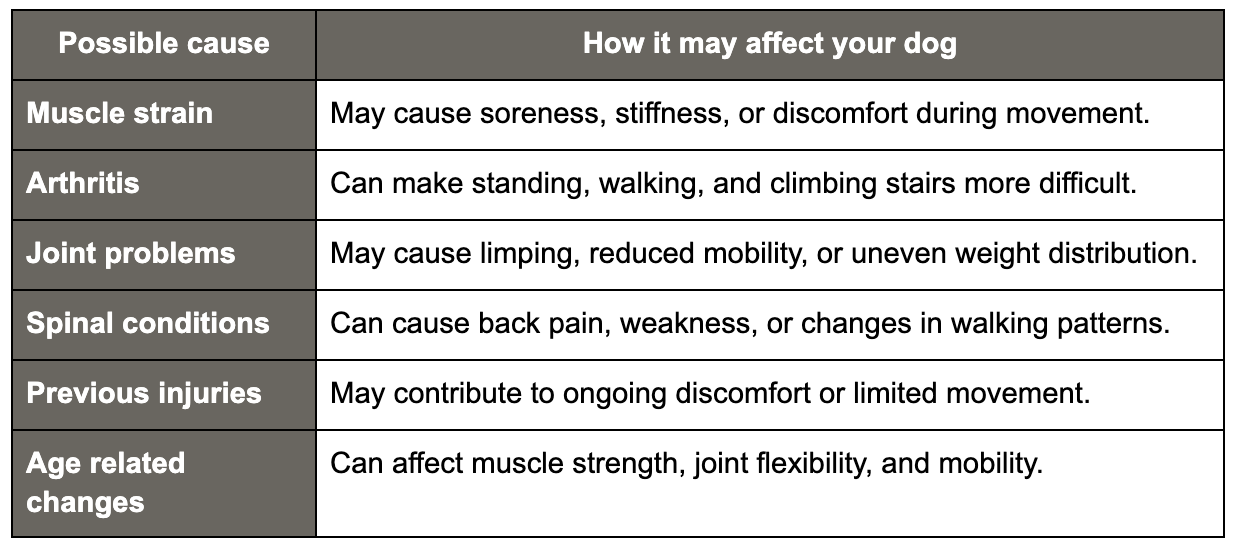
Some conditions require medication, rehabilitation, surgery, or other veterinary treatments.
Identifying the underlying cause is important before deciding whether chiropractic care is appropriate.
When to see a veterinarian before a dog chiropractor
Not every mobility problem is suitable for chiropractic care. Some symptoms may indicate a serious condition that requires immediate veterinary attention.
Seek urgent veterinary care if your dog experiences:
- Sudden inability to walk: Your dog cannot stand or move normally.
- Severe pain: Your dog cries repeatedly, trembles, or cannot get comfortable.
- Dragging the legs: Your dog drags one or more legs or suddenly loses coordination.
- Loss of bladder or bowel control: Your dog suddenly cannot control urination or bowel movements, especially with weakness.
- Recent serious injury: Your dog has been hit by a car, fallen from a height, or experienced significant trauma.
These symptoms may be associated with serious injuries or neurological conditions.
Even when symptoms appear mild, a veterinary examination can help rule out conditions that require medical treatment.
How chiropractic care may help dogs with mobility problems
Animal chiropractic care focuses on assessing joint and spinal movement and using specific manual techniques when appropriate.
For some dogs, chiropractic care may be considered as part of a broader plan to address mobility concerns.
The goals may include:
- Supporting comfortable joint movement.
- Addressing certain restrictions in spinal or joint mobility.
- Complementing veterinary treatment and rehabilitation.
- Helping maintain mobility as part of an individualized care plan.
However, research on chiropractic treatment in dogs remains limited. Its effectiveness for specific conditions has not been firmly established.
Chiropractic care should not replace veterinary diagnosis or necessary medical treatment.
Understanding what happens during a canine chiropractic session can help you know what to expect before considering this approach for your dog.
What to expect during a dog chiropractic evaluation
Before recommending chiropractic care, we assess your dog’s health and mobility to determine whether treatment is appropriate.
An evaluation may include four steps:
- Reviewing medical history: We discuss your dog’s symptoms, previous injuries, and health conditions.
- Observing posture and movement: We assess how your dog stands, walks, and moves.
- Assessing joint and spinal mobility: We check for movement restrictions or sensitive areas.
- Discussing care options: We determine whether chiropractic care or further veterinary evaluation is appropriate.
Each evaluation helps us understand your dog’s individual needs and recommend suitable next steps.
Supporting your dog’s mobility with Tails Animal Chiropractic Care
Recognizing changes in your dog’s movement, posture, or behavior can help you identify potential problems before they affect everyday activities.
At Tails Animal Chiropractic Care, we focus on understanding each dog’s mobility needs and providing individualized animal chiropractic care when appropriate. We also recognize the importance of working alongside veterinary professionals to support your dog’s overall health.
If you have noticed changes in how your dog moves, contact us to discuss whether a chiropractic evaluation may be suitable for your pet.
Frequently asked questions about dog chiropractic care
How do I know if my dog needs a chiropractor?
Stiffness, limping, posture changes, or difficulty jumping may indicate mobility problems. A veterinary evaluation can help determine if chiropractic care is appropriate.
Is chiropractic care safe for dogs?
Chiropractic care may be appropriate for some dogs, but safety depends on their health, condition, and the practitioner’s qualifications.
Can a chiropractor help a dog with back pain?
Chiropractic care may help some dogs with back discomfort, but a veterinary evaluation is needed to identify the cause first.
Can older dogs benefit from chiropractic care?
Some older dogs may benefit, depending on their health, mobility needs, and underlying conditions.
How often should a dog see a chiropractor?
The frequency depends on your dog’s condition, individual needs, and response to care.